

Why is physiotherapy important?
You use your body every day, so looking after it can have a big impact on your overall health and happiness.
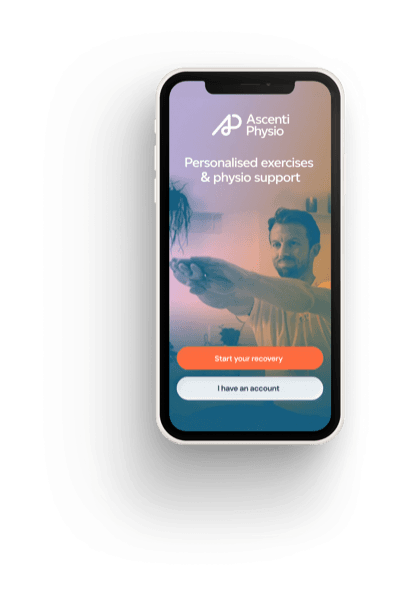
Ascenti Reach app
Manage your recovery and access tailored video guides directly from your phone.
Published
Used to describe a recent or short-term pain, illness or injury, such as a sprained ankle.
Adhesions are fibrous bands of internal scar tissue that form around muscles, usually due to stress, strain or injury.
Biomechanics is the study of how the body functions as a whole. This includes exploring the mechanics of how your muscles, bones and nervous system work together to complete everyday activities, such as walking or sitting down.
Cartilage is a firm connective tissue that is softer and more flexible than bone. You find cartilage in many areas of the body where your joints and bones meet, for example around the knee.
Used to describe a long-term and persistent pain, illness or condition that doesn't go away or is continuous, such as back pain or arthritis.
Cognitive therapy, also known as biopsychosocial treatment,refers to any support or treatment you receive from your physiotherapist that is not a manual therapy. For example, lifestyle advice or addressing misunderstandings or negative beliefs about your condition through education and management programs.
In physiotherapy this term is used to describe the natural decline or deterioration of a particular muscle, joint or body part, often due to older age.
You have 24 separate bones called vertebrae that make up your spine. Between each of these you have a 'disc' of gel-type substance that acts as a shock absorber when you twist or bend the spine.
The fascia is a layer of thin connective tissue that wraps around each muscle.
Many people refer to a sudden increase in pain or the return of a previous condition as a flare-up. This is not a clinical term but is a phrase many people are familiar with.
The word joint is used to describe the point where two different bones meet, for example around your knee.
Your ligaments are short bands of flexible and connective muscle tissue that help to hold your bones together, for example around your ankle.
This is the clinical terminology used to describe the action of putting weight or a 'load' onto a certain muscle, joint or part of the body.
Manual therapy is the term used to describe treatments that your physiotherapist delivers by hand, for example soft-tissue massage and joint mobilisation.
The word muscle is used to describe any area of tissue in the human body that has the ability to contract and produce movement. There are many different muscle types and groups.
When certain areas are under stress, our muscle fibres sometimes become tense or less flexible. This restricts optimal movement and function, and can create pain.
Optimal loading is the clinical term used to describe when you apply the ideal amount of weight or 'load' to a muscle, joint or part of the body for the stage of recovery you are at, i.e. the optimal amount.
Orthotics are devices that you put into your shoes to support your feet. They help to realign your limbs and correct posture, which can reduce strain and pressure on other areas of the body.
Pathology is the clinical term used by physiotherapists and medical professionals to describe the root diagnosis or cause of symptoms or pain.
This is a clinical term used to describe when injured body parts lose their in-built balance mechanisms. For example, following an ankle sprain your ability to valance on the ankle may be affected not because of weakness but because of a loss of proprioception of the ankle joint.
Used to describe a pain, illness or condition that comes and goes, such as a headache.
This is when you are referred to another agency for consultation, review or further action.
You may have been referred to us by your GP, an insurance provider or another party. Equally, your Ascenti physiotherapist may refer you to another specialist, for example if they feel you need an operation or an injection.
When we use this word in physiotherapy we are referring to the rehabilitation and recovery of a muscle, injury, body part or your physical health. It involves the staged progression of exercises to enable you to return to your full function.
Sciatica is the clinical term used to describe pain that transfers down the back of the leg from the lower back, often with a feeling of numbness or weakness in the legs.
You do not need to be referred to us by another agency or medical professional to receive treatment. Anyone can refer themselves to us for pay as you go bookings or treatment covered by private medical insurance – find out more.
We also offer members of the public the opportunity to refer themselves for NHS Community Physiotherapy in certain areas of the UK where we provide these services – find out more.
When we say soft-tissue we are referring to the muscles, ligaments and tendons surrounding the joints and bones.
Tendons are long and firm cords of strong fibrous muscle tissue that attach muscle to bone, for example along the back of your calf muscles.
You have 24 separate bones called vertebrae that make up your spine.
This is a common term used to describe the act of putting force or weight onto a certain muscle, joint or part of the body. For example, walking is a 'weight-bearing' activity.
You use your body every day, so looking after it can have a big impact on your overall health and happiness.

Ascenti’s Virtual Physiotherapy Service Lead, Jamie Duke, talks about the future of digitally-enabled musculoskeletal (MSK) physiotherapy and the important role that it will play in shaping employee wellbeing services of the future.

Online physiotherapy is an alternative to a face-to-face appointment that can save you time and offer great results.

Video physiotherapy consultations are available as part of our virtual service. Find out more about our online appointments here.

If you’re not the most confident with technology and are wondering where to begin with the whole concept of ‘online’ physiotherapy appointments, check out our advice here.


Every woman’s journey is different. Our physiotherapists are here to help you stay active, manage pain, and move freely, whatever stage you’re at.

Heading to the slopes? Here are 5 physio tips, plus a quick warm-up and simple ski workout to help reduce injury risk and ski with confidence.

Poor circulation can feel exhausting These simple exercises can help you improve your circulation, get your blood flowing, and warm you up this winter.

Here are five exercises you can do at home to feel flexible, more energised, and reduce stiffness this winter.

Discover why Pilates is such an an effective way to overcome back pain whilst improving strength, flexibility and wellbeing.

Clinical Performance Lead Beenish Kamal breaks down what musculoskeletal (MSK) physiotherapy involves, which conditions it helps treat, and the symptoms and causes you should know about.
