

Why is physiotherapy important?
You use your body every day, so looking after it can have a big impact on your overall health and happiness.
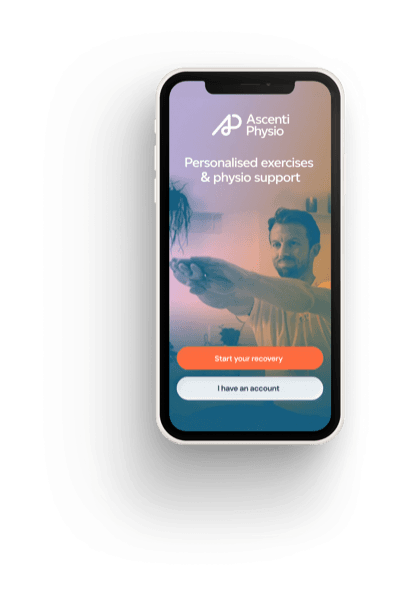
Ascenti Reach app
Manage your recovery and access tailored video guides directly from your phone.
Published
As a condition that affects the brain, movement and musculoskeletal health (MSK) those with Parkinson’s may benefit from certain exercises and activities, which can be done individually or with the help of relatives, friends or carers.
To help with this, we asked our Senior MSK Physiotherapist Rachael Newman, who has experience in neurological rehabilitation, to share her advice on what exercises and activities may be of particular benefit to those with Parkinson’s.
Parkinson’s disease is a condition affecting the brain that slows down movement, affects your walking and impairs your thought processes. Everyone is affected differently, but most commonly it can lead to issues such as muscle stiffness, reduced balance, and finding it hard to start movements - such as standing up or taking a first step.
Due to these symptoms people often find that day-to-day life becomes challenging. Furthermore, studies show there is an increased risk of falls, with around half of people with Parkinson’s having a fall each year. Physical activity is a great way to address these issues.
There are a number of stretches and activities that can help people with Parkinson’s to tackle muscle stiffness. They include:
Building up strength can help those with Parkinson's to reduce the risk of falls and injuries. Some strengthening exercises can include:
More inspiration for strengthening exercise and support can be found on the newly launched "Stronger My Way" hub from the Chartered Society of Physiotherapists (CSP).
Every person’s abilities will be different so, if you’re unsure on what is safe for you to do, it is always best to speak with a physiotherapist to get a tailored exercise program.
Putting on a familiar, favourite song and having a dance around with your partner, family member or carer is a great activity to help with strengthening, improving balance and getting stiff muscles moving! It can also be easier to initiate movement with music playing and stepping in time to the song.
For people that struggle with initiating movements, cueing can be really effective. It can be as simple as counting "1,2,3,4" in your head with the intention of taking a first step on 1 and stepping in time with the counting. Cueing strips or blocks can also be placed on the floor to help with taking larger steps. Some walking aids project lines onto the floor wherever you are walking to help with this, such as a laser cane.
Almost any activity that gets you moving can have benefits for people with Parkinson’s disease. You could try:
Our understanding of Parkinson’s disease and how best to manage symptoms is constantly improving. Companies like Strolll are developing innovative ways of using technology to improve mobility with visual and audible cues simulated by an AR headset.
You use your body every day, so looking after it can have a big impact on your overall health and happiness.

Confused by the technical terms? You’re not alone, which is why we’ve created this section explaining some commonly used words and phrases.

Ascenti’s Virtual Physiotherapy Service Lead, Jamie Duke, talks about the future of digitally-enabled musculoskeletal (MSK) physiotherapy and the important role that it will play in shaping employee wellbeing services of the future.

Online physiotherapy is an alternative to a face-to-face appointment that can save you time and offer great results.

Video physiotherapy consultations are available as part of our virtual service. Find out more about our online appointments here.

If you’re not the most confident with technology and are wondering where to begin with the whole concept of ‘online’ physiotherapy appointments, check out our advice here.


Every woman’s journey is different. Our physiotherapists are here to help you stay active, manage pain, and move freely, whatever stage you’re at.

Heading to the slopes? Here are 5 physio tips, plus a quick warm-up and simple ski workout to help reduce injury risk and ski with confidence.

Poor circulation can feel exhausting These simple exercises can help you improve your circulation, get your blood flowing, and warm you up this winter.

Here are five exercises you can do at home to feel flexible, more energised, and reduce stiffness this winter.

Discover why Pilates is such an an effective way to overcome back pain whilst improving strength, flexibility and wellbeing.
