

Why is physiotherapy important?
You use your body every day, so looking after it can have a big impact on your overall health and happiness.
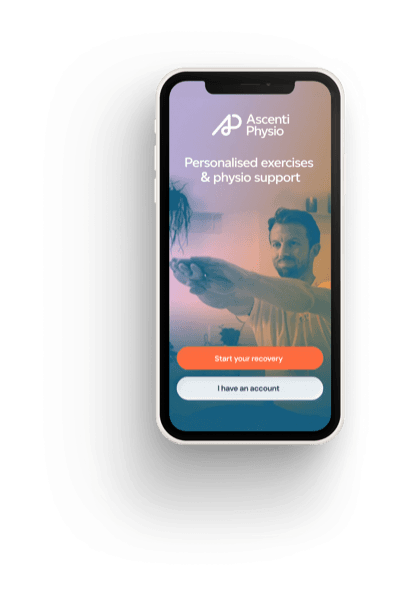
Ascenti Reach app
Manage your recovery and access tailored video guides directly from your phone.
Published
If you have never experienced it before, then the sudden onset of pelvic, hip and back pain during pregnancy can be extremely worrying and debilitating.
Many women who come to see me are in a lot of discomfort and feel helpless. They’ve often searched online, looked at forums, heard stories about how bad things can get or that it isn’t going to get better until they give birth.
The main thing that I want you to take away from this article is that pelvic pain during pregnancy is common, but it is not normal and you shouldn’t just have to just get through it.
There are things that you can do to treat and improve your situation.
Pelvic Girdle Pain (PGP) is an umbrella phrase used to describe any pain down the legs, hips, pelvis, pubic symphysis area (front of pelvis), sacroiliac joint and buttocks.
It can be very painful and leave you with real difficulty moving around and living normally.
There’s never a straightforward answer to this question and the causes are often multifactorial and different for each woman.
It can be due to your pelvic joints and the biomechanics of your body altering to accommodate your growing bump, an existing underlying weakness such as back pain before the pregnancy, hormonal changes relaxing your joints or even the position of your baby.
Lifestyle factors such as being overweight and smoking have also been shown to increase your chances of experiencing this issue during pregnancy.
Pelvic pain during pregnancy is common.
Up to 70% of the antenatal population are thought to experience it, but pelvic pain should not be normalised and it shouldn’t be something that you just have to persevere with.
Pelvic girdle pain can start at any time during pregnancy.
Some women experience it quite early in pregnancy but the majority of women experience it in the third trimester.
It may occur the whole way through your pregnancy or just for a short period.
We’ve all heard stories of people ending up in wheelchairs, but it’s important to remember that these women are a minority.
Everyone is different, but for the vast majority if you have been diagnosed with PGP and get the correct treatment then your symptoms can be improved if not fully settled.
At the very least you should be able to improve your pain levels, mobility and the management of your condition for the remainder of your pregnancy.
If you don’t seek treatment then your symptoms can escalate into a chronic problem, which is when emotional factors can also set in and affect your overall wellbeing.
Your NHS midwife or doctor will be able to refer you to a physiotherapist if needed.
They often liaise with a women’s health physiotherapist and in some cases they might run ante-natal classes together, but every area and service is different.
Alternatively, you can seek help yourself and pay for treatment with a physiotherapist registered with the Chartered Society of Physiotherapists (CSP). See below for more information about how physiotherapy can help you.
It’s important to understand that each discipline has their own area of expertise when it comes to pregnancy. As physios we utilise our clinical knowledge in treating musculoskeletal (MSK) conditions and adapt it to pregnancy and pelvic girdle pain.
Do remember each woman’s experience of PGP differs slightly, so different exercises will suit different women. There is no one single exercise or exercise programme that will suit everyone.
As a general rule, you should allow your pain to act as a guide to how much exercise you can do. It is helpful to keep as active as possible, within the limits of your pain.
1. Lie on your back, lift your legs together with your feet in contact with the floor.
2. Gently roll to your right, keeping your knees together and your spine flat on the floor.
3. Hold this for 30 seconds.
4. Repeat on your left hand side.
Aim for 3 sets of 10 daily.
If you are struggling to get on and off the floor, then you can always lie on your bed instead.
1. Lean your back against the wall, with your shoulder blades touching the wall and bend your knees slightly. You will find that you have an arch or a gap at the bottom of your back.
2. Work to reduce this gap by curving your lower spine into the wall, making as much of your spine make contact with the wall as possible.
3. Hold for 15 seconds and then release.
Aim for 3 sets of 10 daily.
A lot of women with pelvic girdle pain are given crutches, but the latest thinking and also my personal opinion is that they should be avoided or used as a last resort.
I understand that they can be comforting and help you to get around, but if you use them instead of addressing the underlying problem then you are going to create a dependency and reduce strength you need in other areas. As your baby gets bigger you will need this strength to prevent other problems from occurring.
Maintaining as much activity and normal function as you can during pregnancy has also been shown to improve your chances of an uncomplicated labour and a fast recovery.
It can be difficult to adapt your sleeping position and women often wake up on their front in the early stages of pregnancy.
The advice is that during the second and third trimesters (from 14 weeks onwards), lying on your front (or back) should be avoided where possible due to potential changes in blood flow to the growing baby.
Lying on your side, supporting your bump with a pillow underneath it, and with a pillow between your knees is often very comfortable and safer for you and your growing baby.
It can be good to see someone like myself who has specialised in women’s health, but any physiotherapist will be able to help you or refer you to someone else who can.
They will talk to you about your pelvic girdle pain and conduct an assessment, before considering a number of treatment options and a plan of action.
This is likely to include exercise therapy to aid mobility, build strength and address any areas of weakness, lifestyle advice and manual therapies.
Manual therapies include ‘hands-on’ treatments such as soft-tissue massage and joint mobilisation, and are highly effective for Pelvic Girdle Pain.
Manual therapy of the pelvic joints and soft-tissues are safe and effective during all stages of pregnancy when performed by a Charted Physiotherapist. It has been noted that early diagnosis and effective treatment can resolve symptoms during pregnancy.
It’s a vicious cycle because once you are in a lot pain you start to tense your body and make adjustments that can exacerbate the problem.
I use manual therapies to address muscles that are ’over-active’, which is essentially when they are in spasm. These therapies help to open up the area and to relax the muscles, but it can feel uncomfortable during treatment because they’re going to be very sensitive.
There are usually a couple of tender areas on the back that we call trigger points. These become really hyper sensitive during pregnancy and can cause pain referral down the back of your leg. By working into these we can deactivate the referral of pain and improve your mobility.
Myself and a number of Ascenti physiotherapists are specialists in women’s health issues.
Not all Ascenti physiotherapists are trained to this degree, but they will be able to help you or refer you to a specialist if needed.
If you are looking for obstetrics related physiotherapy (antenatal or postnatal care) please call our customers services helpline (0330 678 0850) for a remote initial assessment with one of our specialist trained therapists. They will assess your symptoms virtually and ensure you continue your treatment with the most appropriate therapist for your needs.
Please note we cannot support the following conditions:
Read our article on rebuilding strength and exercising after birth.
You use your body every day, so looking after it can have a big impact on your overall health and happiness.

Confused by the technical terms? You’re not alone, which is why we’ve created this section explaining some commonly used words and phrases.

Ascenti’s Virtual Physiotherapy Service Lead, Jamie Duke, talks about the future of digitally-enabled musculoskeletal (MSK) physiotherapy and the important role that it will play in shaping employee wellbeing services of the future.

Online physiotherapy is an alternative to a face-to-face appointment that can save you time and offer great results.

Video physiotherapy consultations are available as part of our virtual service. Find out more about our online appointments here.

If you’re not the most confident with technology and are wondering where to begin with the whole concept of ‘online’ physiotherapy appointments, check out our advice here.


Every woman’s journey is different. Our physiotherapists are here to help you stay active, manage pain, and move freely, whatever stage you’re at.

Heading to the slopes? Here are 5 physio tips, plus a quick warm-up and simple ski workout to help reduce injury risk and ski with confidence.

Poor circulation can feel exhausting These simple exercises can help you improve your circulation, get your blood flowing, and warm you up this winter.

Here are five exercises you can do at home to feel flexible, more energised, and reduce stiffness this winter.

Discover why Pilates is such an an effective way to overcome back pain whilst improving strength, flexibility and wellbeing.
