

Why is physiotherapy important?
You use your body every day, so looking after it can have a big impact on your overall health and happiness.
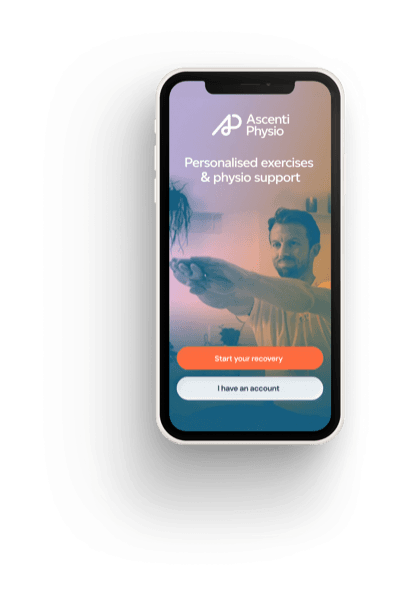
Ascenti Reach app
Manage your recovery and access tailored video guides directly from your phone.
Published
I’m very goal orientated myself so it’s important for me to understand what my clients' goals are and how physiotherapy can help them to enjoy their hobbies and activities.
Every three or four months I’ll sign up to an endurance event because I used to find that my training got a bit boring if there wasn’t an end goal. I’ve recently completed a Spartan Run and Survival of the Fittest challenge.
I see a lot of people with complaints or injuries that I can relate to myself.
Everybody has a biomechanical soft-tissue threshold, so tendon injuries are common when the load is greater than the body’s capacity.
I see a lot of shoulder injuries from upping weights too quickly in the gym and lower limb injuries with people not allowing adequate recovery after long runs.
Read more: Fuel your body with a balanced diet
Do a short cardio session before you move onto lifting weights or your main workout.
If you are going to be working on your arms, do a short warm up that focuses on your arms and not your lower body – i.e. X-Trainer
This type of warm up helps to increase blood flow to the area, which reduces the likelihood of injury by warming up the soft-tissue and muscles.
Using a foam roller post exercise can help to support your muscles.
The benefits include reducing inflammation, scar tissue and joint stress, as well as improved circulation and flexibility.
Regularly rolling pre and post workout will mean you will help prepare your muscles for the workout ahead and also help with post muscle recovery.
Feeling some discomfort after a good workout is normal as your muscles work to rebuild, but if this escalates to pain then you should seek advice from a physiotherapist.
With some tendon injuries it can be helpful to keep moving, but with others, it can be essential that you scale down your workout routine and address the issue as soon as possible – for example with manual therapies and exercise adjustments.
I always try to explain to people that you don’t have to have a severe injury to see a physiotherapist.
With training, your body is always repairing and rebuilding, so it can help to see a physio for some soft-tissue massage and advice every 4 – 6 weeks.
Professional footballers and athletes have regular physio for this exact reason.
Being proactive about your wellbeing in this way can help you to stay on track for your goals and to prevent problems or injuries before they start.
You use your body every day, so looking after it can have a big impact on your overall health and happiness.

Confused by the technical terms? You’re not alone, which is why we’ve created this section explaining some commonly used words and phrases.

Ascenti’s Virtual Physiotherapy Service Lead, Jamie Duke, talks about the future of digitally-enabled musculoskeletal (MSK) physiotherapy and the important role that it will play in shaping employee wellbeing services of the future.

Online physiotherapy is an alternative to a face-to-face appointment that can save you time and offer great results.

Video physiotherapy consultations are available as part of our virtual service. Find out more about our online appointments here.

If you’re not the most confident with technology and are wondering where to begin with the whole concept of ‘online’ physiotherapy appointments, check out our advice here.


Every woman’s journey is different. Our physiotherapists are here to help you stay active, manage pain, and move freely, whatever stage you’re at.

Heading to the slopes? Here are 5 physio tips, plus a quick warm-up and simple ski workout to help reduce injury risk and ski with confidence.

Poor circulation can feel exhausting These simple exercises can help you improve your circulation, get your blood flowing, and warm you up this winter.

Here are five exercises you can do at home to feel flexible, more energised, and reduce stiffness this winter.

Discover why Pilates is such an an effective way to overcome back pain whilst improving strength, flexibility and wellbeing.
